Transforming Completions Operations with Advanced Near Real-Time Stage Detection

Understanding trouble stages in real time is critical to improving completions performance and reducing non-productive time. Traditional approaches often fall short by relying on fragmented data and reactive decision-making. This white paper introduces a structured, data-driven model for stage detection—enabling teams to quickly diagnose deviations like screenouts and rate drops, distinguish between surface and subsurface issues, and apply targeted remediation strategies. It also explores how this capability sets the stage for predictive insights, empowering operators to identify high-risk stages before problems arise.
Download the full white paper to learn how leading teams are transforming operational awareness into a competitive advantage.

Collaboration
Corva and Oliasoft Create a Continuous Learning Loop Between Well Design and Drilling
Discover how Corva's Predictive Drilling increased lateral ROP by 20%, eliminated pressure swings, and established a new drilling performance benchmark in the Barnett Shale.
 Oct 12, 2026
AI
Transforming Well Construction with AI: Corva and YPF Advance from Real-Time Intelligence Toward Autonomy
Discover how Corva's Predictive Drilling increased lateral ROP by 20%, eliminated pressure swings, and established a new drilling performance benchmark in the Barnett Shale.
Sep 3, 2026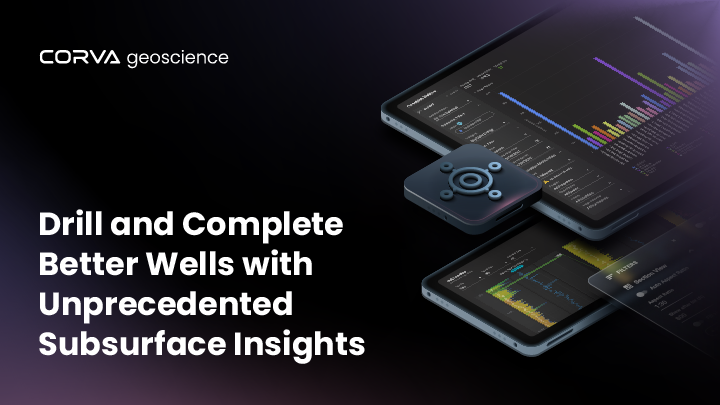
Geoscience
Corva Geoscience
Explore Corva’s geoscience data analytics platform for oil & gas. Integrate subsurface data, accelerate interpretation, and make faster, more confident decisions with AI-powered insights.
Jul 31, 2026